

“When clear communication is taking place, we feel informed, engaged, involved and aware.”
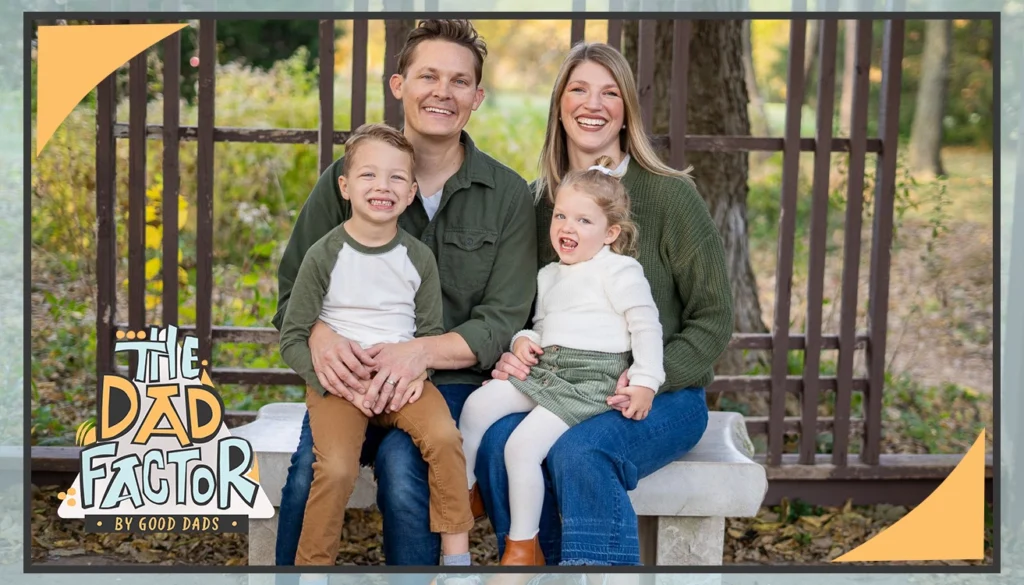
That’s what Brian Mattson, father of two and lead pastor at the Downtown Church in Springfield, had to say about the importance of communication in relationships. He’s learned a thing or two about communication through his both career and family.
How can fathers be clearer communicators? What role do fathers play in developing their child’s emotional intelligence? How does active listening and asking questions help build trust?
Brian described being an active listener for your family as “the most rewarding thing we can do in life.” Keep reading for insights on being a more effective communicator with your family!
Navigating communication hurdles with your partner
Brian and his wife, Jessica, have been an “item” for 25 years and married for 10. After marriage, they moved in together for the first time. Brian said there was some getting used to living in the same space together. Communication was key to finding out how each other could live harmoniously in the same space.
Since the two have known each other for a long time and are comfortable with each other, Brian sometimes makes the assumption that Jessica knows something, even if it hasn’t been communicated out loud.
For example, after Sunday services, Brian stays to talk with congregation members. Sometimes, he’ll inadvertently lose track of time without letting Jessica know when he’ll be home. He says clear communication in moments like that would prevent leaving Jessica uninformed in the future.
“I’m the worse communicator of the two of us,” he admitted. “Sometimes I assume she’s in my head and understands what I’m thinking.”
Even if you and your partner can finish each other’s sentences, neither one of you can read each other’s minds!
“Communication has to be in place so we’re not in the dark,” he said.

Little listeners, big feelings
Brian and Jessica have learned and grown a lot over the course of their marriage and parenting journeys. Brian said growing up and parenting in the 90s was very different from today, but that isn’t necessarily a bad thing. Parenting for the two of them is a lot more well-rounded, as opposed to one parent being in charge of one specific area. This includes emotional intelligence; communicating and expressing big feelings to little listeners.
“I was not really in tune with emotions until I was a parent,” Brian admitted. “(Dads) can be in touch with their emotional sides and express emotions in healthy ways. It helps you be an emotionally stable human.”
Brian’s children, Jack (7) and Dorothy (5), learned in preschool about “color spot emotions,” associating colors with certain emotions (red for anger, yellow for happiness, etc). Through this method, Brian and his children are able to more effectively identify and communicate their feelings and build an emotional understanding.
Expressing and discussing emotions isn’t just Mom’s job! For Brian, it’s important that children have an emotional connection to both parents equally.
“If dads are just dismissing outbursts and emotions as pushing back, that’s more of a detriment to the dad,” he said. “They’re missing the full scope of parenting. You want to be all in as a parent, involved in all situations.”

Tackling tough topics
Parents and longtime readers of the Good Dads blog know that kids are like sponges! They absorb the words and behaviors they’ve seen and heard. For example, Jack is beginning to hear more mature conversations than he did in preschool. Topics like politics and war are tough, but it doesn’t mean they should be avoided.
“It’s best that you take a pause before blurting anything out,” Brian said. “I let him ask questions, and (I) explain difficult concepts in a way that a 7-year-old can take in.”
For tough topics, Brian talks with Jessica first to see how they can best tackle it in an age-appropriate way.
“You don’t necessarily want to overcommunicate adult topics,” he continued. “Remember, you’re talking to a kid. Figure out how to give real, honest answers that are still protecting them.”
For example, Jack asked about Martin Luther King Jr. after learning about him in school and passing the Springfield bridge with his namesake. When discussing the civil rights leader, Brian told Jack that he fought with words, not hands, for the rights of all people.
In this way, Brian was able to communicate a complex issue respectfully while keeping the conversation on a level understandable to a youngster.
Being both approachable and an active listener is important for trust between parents and children to grow.
“Try to remember what it was like being a kid,” he said. “(We) tell our kids there isn’t a question they can’t ask. Don’t feel like you can’t ask a certain question; let’s have it out in the open.”
What happens when we fall short?
How do you feel when you’re not being listened to? For Brian, he admitted when his children don’t listen, it’s hard not to feel frustrated. While there are eventual consequences for not being listened to, Brian said that as a dad, it’s important to keep your cool.
“Don’t go from 1 to 100,” he said. “Take a step back and take a breath. You are the adult; do your best to handle it with grace.”
We all fall short at being good listeners and general communicators at times. Brian said this could be the result of personal frustrations or not being fully present. He said owning up to your mistakes is a sign of maturity and sets a good example for your kids.
“If you can’t step back and say ‘sorry, let’s try this again,’ we’ve got some growing up to do on the adult side,” he said. “It’s your role as a parent to model good behavior.”
Final Words
For dads, it can sometimes feel like life is constantly moving at a fast pace. No matter how busy you are, taking the time to be an active listener is important for communication and strengthening personal relationships.
“It’s important to invest in things that matter,” Brian said. “Relationships, especially with children, have to be at the top of your list. If you’re not taking being an active listener seriously, you’re missing out on how deep this love can go with your kids.”