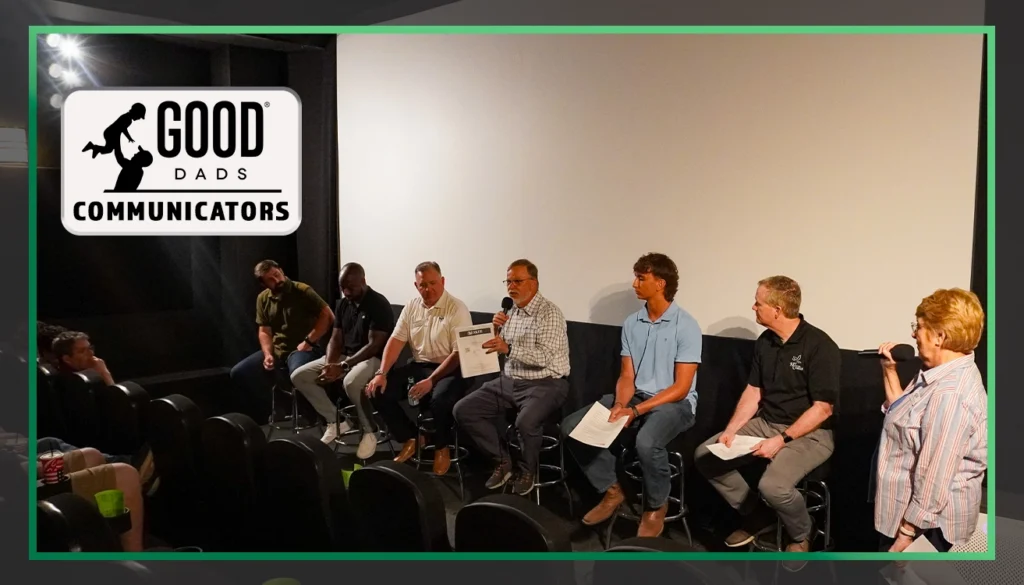
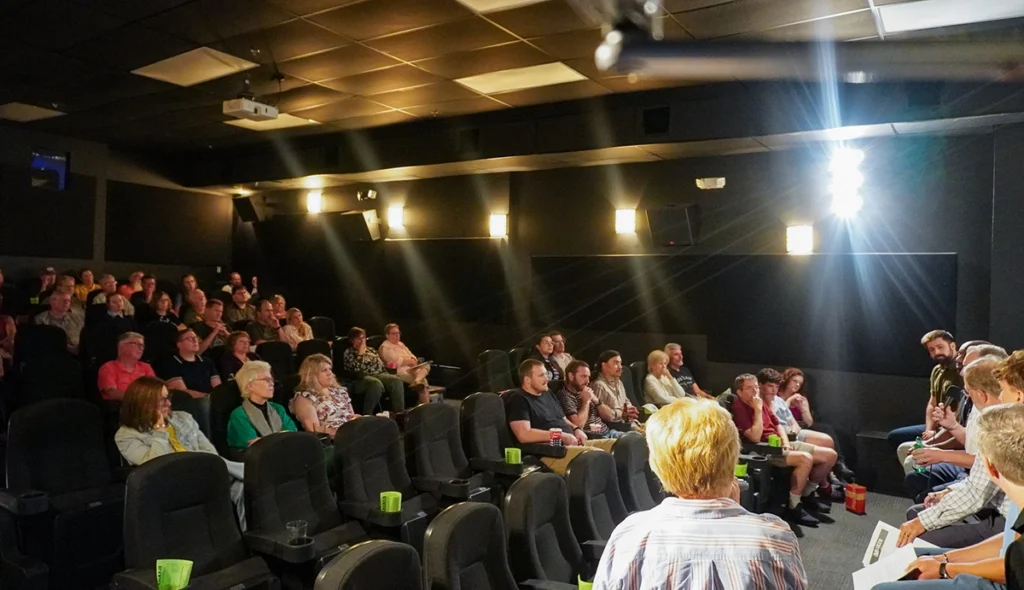
Following Good Dads’ screening of “Gone Guys,” an energetic—sometimes hopeful, sometimes sad—but nonetheless meaningful conversation occurred. We hosted a six-member panel to speak about their personal and professional experiences as it relates to the themes and topics in the documentary.
Over the past fifty years, boys and young men have steadily disengaged from school, work and broader society. They’re falling behind academically, struggling with loneliness and isolation, and facing rising rates of substance abuse and suicide.
Drawing on the work of Richard V. Reeves’ book “Of Boys and Men,” this documentary illuminates the challenges facing males while making it clear that caring more about boys and men does not mean caring less about women and girls.
Set in rural Vermont, the film brings national data to life and weaves together the lived experiences of young men, educators, mentors and programs that are working to re-engage boys and young men in their communities and reshape their futures.
The themes and statistics presented in the film dovetails perfectly with the mission and vision of Good Dads: where we know that fathers play an instrumental role in the wellbeing of their children. Each panelist brought his unique perspective to the documentary, and we’re grateful for their time.
Panelists
- Tyler Head, Business & Leadership Coach, Good Dads Board Member
- Josh Shavers, Head of Infrastructure & Shared Services at Luma Financial Technologies
- Travis Rubelee, Scout Executive & CEO at Scouting America Ozark Trails Council
- Jim Millsap, retired teacher & principal, Good Dads Strong Schools captain
- Barrett Burns, mechanical engineering student, Missouri State University
- Kyle John, Medical Director at Arc of the Ozarks, Good Dads Board Member
Unmotivated male students are facing an uphill battle in higher education.
Panelist Barrett Burns said when he started his freshman year at Missouri State university, he was excited. He made lots of friends and built his class schedule alongside them. But at the end of the spring semester, three of his closest friends told Burns: “School just isn’t for me.” They told him they wouldn’t be coming back next year. Burns is disappointed that he’ll need to find new colleagues to study with, but beyond that, he sees in real-time the same statistics the documentary cites—which paint a worrying picture of young men’s underperformance in higher education.
Additionally, Burns said not enough people are talking about the mental health crisis facing men today. At only 19 years old, Burns said he has had three friends who have taken their lives. “It’s tough to live with,” he said. “I’m gonna have to live with that for the rest of my life.”
Fatherlessness is generational.
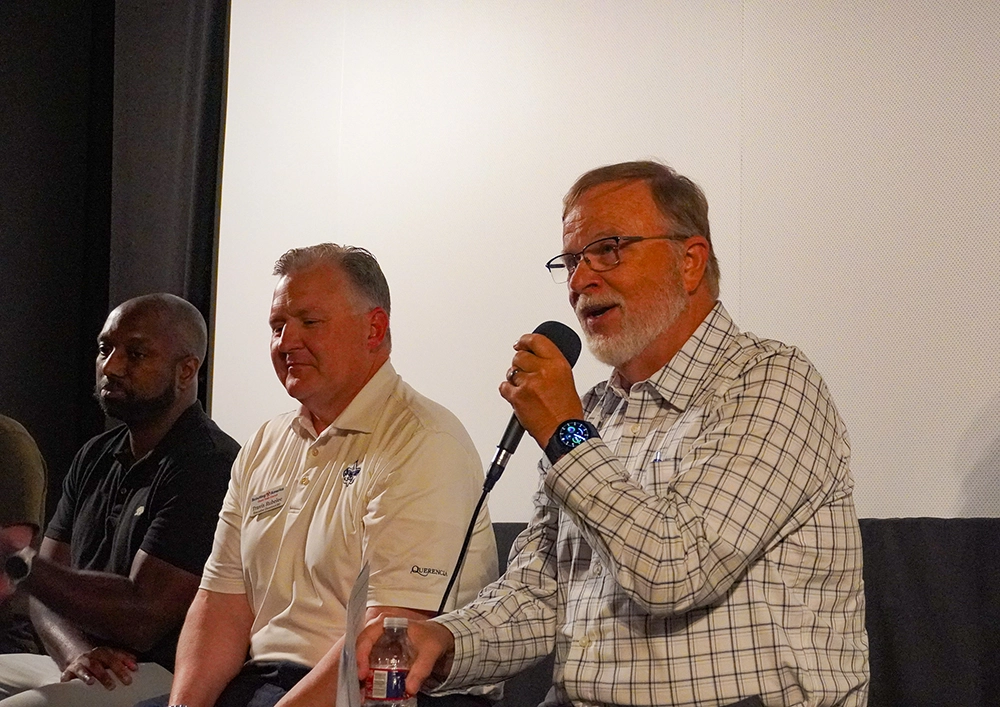
Kyle John, a child and adolescent psychologist and a father of two, says he sees the effects of children who lack positive influences daily in his profession. He also pointed to generational effects: If you grew up without a father, you’re more likely to suffer negative outcomes, and your children are more likely to inherit those outcomes, too. He called the documentary “a wake-up call,” sharing that he sees many of the documentary’s statistics reflected in his two adult sons and their friends.
Because boys learn differently at varied educational milestones, it’s “inappropriate” and “impractical” to expect young boys to sit still at a desk for eight hours a day in school, John said. A one-size-fits-all system of education doesn’t fit most boys, he said. In John’s view, healthy mentorship and role modelling is a huge step in the right direction. That’s one of his most-often repeated advice he gives parents of his patients.
Young men struggle to find purpose in school; role models can be a part of the solution.
Jim Millsap, now retired, spent a great deal of his educational career in rural Ozarks schools, and he called many of his male high school students his “belt buckle boys,” referring to the epitome of Missoui fashion. Those belt buckles represented their ambitions, but Jim worried that school didn’t matter to them. He feared it was because there were so few male mentors in elementary and middle school that, by the time these students got to high school, they seemed directionless.
Millsap observes a generation of loneliness and isolation. This is a result of the digital age and the suffering that came with COVID-19 lockdowns in 2020 and 2021. He is hopeful, though, because he’s observing the tides are turning among educators who know, now more than before, just how important it is to make meaningful, authentic, trusting connections with students.
Children (both boys and girls) face a dearth of character-building opportunities.
Travis Rubelee is glad that Scouting America (formerly Boy Scouts) now welcomes both boys and girls —and as a dad to a 15-year-old daughter and 12-year-old son, he feels strongly that both his children deserve the same things that scouting offers: opportunities to be friendly, courteous and kind.
In Rubelee’s view, the biggest return you’ll get from scouting and other extracurricular activities is the chance to make a difference in the lives of others. It’s also a chance to be a leader and develop life skills you might not learn in the classroom. But his chapter of Scouting America serves less than 2% of the total population of young people in the Ozarks, and he suspects the numbers are so low because it is a symptom of extremely busy parents, who work long hours and might not see themselves positioned as their children’s role-models.
Young men ought to turn inward, not to social media, for their definitions of success.
Viewing the documentary through the lens of the tech sector, Josh Shavers says the ubiquity of social media and AI are a major concern for him as a dad. When you spend a lot of time on social media, Shavers says, you tend to compare your regular, everyday life to the fabricated or highly staged photos of others, which can have terrible consequences for developing minds.
Shavers said that young men need what we all need: confidence, connection, and purpose. This is true for everyone, including Shaver’s own special needs seven-year-old son, who has Down Syndrome. Shavers is hopeful, however, that secondary career-preparedness programs are a step in the right direction for redefining what success looks like. Success for everyone doesn’t mean the same thing. Success, in Shavers’ view, is whatever it takes to live a meaningful life.
The problem is here … and so is the solution!
When Tyler Head watched the film the first time with his fellow Good Dads board members, he saw himself in the young men subjects. Head grew up in the shadow of his father’s addiction, in rural Tennessee. He had an intense longing to be seen, known and heard. Now as a dad himself, he feels strongly that we not shy away from exposing the gaps in our own communities.
It’s a slippery slope, Head says, if we assume that the problem exists somewhere else, far away. It’s not true: The problem is in our own back yards. But the good news is that the solution is right here, too, and Head says solutions come from people from all walks of life.
Missed our first screening?
We want to work with other businesses and organizations to host additional screenings of Gone Guys! We’ve found it to be an immensely helpful conversation-starter about the role of fathers in education, economics and community-building. With Father’s Day right around the corner, June is the perfect time to host a community event to view the film. Reach out to us on our Contact Us page to get the ball rolling.