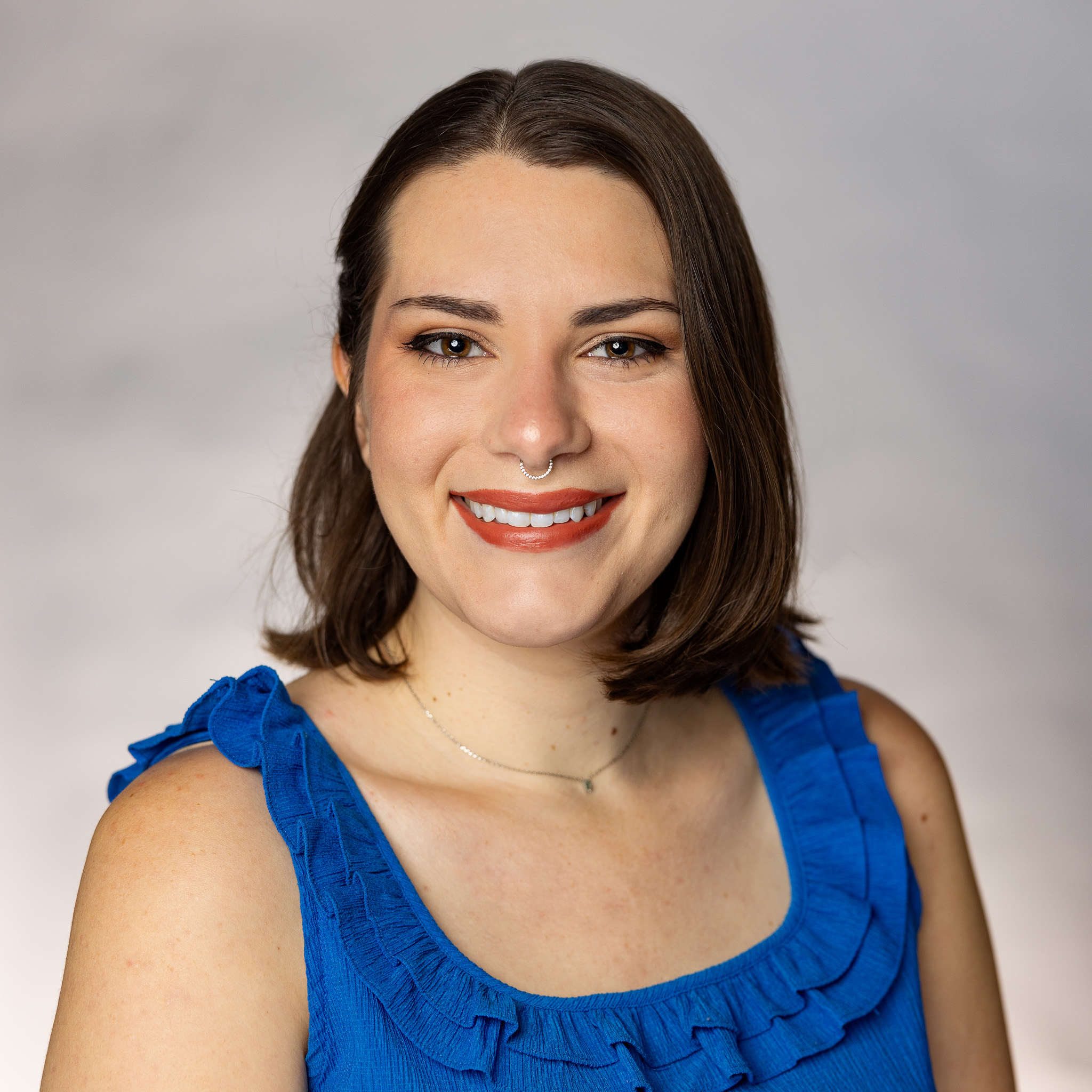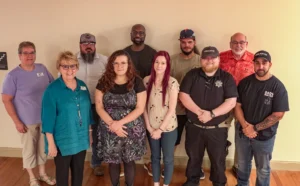

This week on the Good Dads Blog we sat down with one of the newest members of the Good Dads team, Scott Lewis, a former aviation operations specialist and father to a one-year-old daughter. Previously, Scott worked as Product Manager at DMP, Digital Monitoring Products, in Springfield.
Now he’s at the helm of Good Dads’ newest programs, Good Dads +Us and Good Dads Forge. His plate has been full with all that it takes to launch a new program: contacting potential facilitators, becoming an expert in our reporting software, building referral sources, developing intake systems and so much more.
Scott’s responses have been edited for length and clarity.
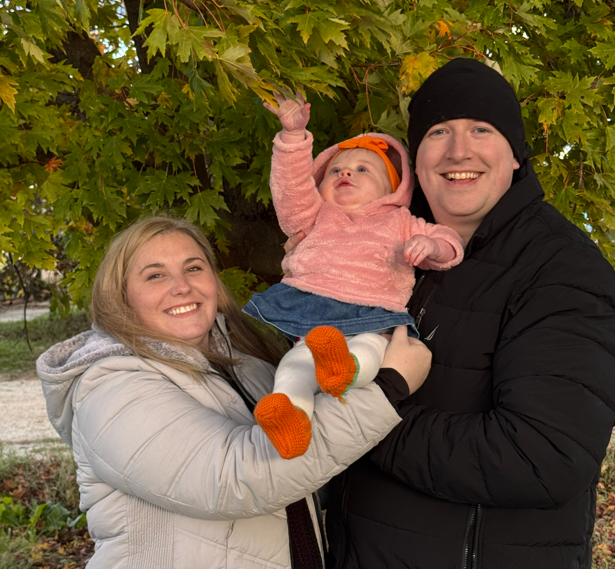
Question: You’re relatively new to the Good Dads, having started in mid-February. We’re glad to have you on the team! In the time since you were hired, what has stood out to you about Good Dads? Has anything surprised you so far?
Answer: I was so surprised with the number of different programs Good Dads offers. This includes New Pathways for Good Dads, our program for at-risk fathers; Good Dads Strong Schools for fathers of elementary students; Good Dads Great Communities for leaders eager to bring a Good Dads initiative to their community; and now, our newest programs. Most people know Good Dads for one program or another, but they are not necessarily familiar with the totality of the work that we do.
I also didn’t know much about the Good Dads chapter model when I first started. I was surprised with how vastly we are represented across the state. Obviously, I knew we weren’t just serving southwest Missouri, but I didn’t know just how much this organization has grown!
Q: Your chief focus as Program Manager is to spearhead the newest Good Dads programs, Good Dads +Us and Good Dads Forge. They’re similar programs but they have some key distinctions. Paint a picture for us.
A: The biggest difference is who each program is for. In short, Good Dads +Us is for co-parenting partners to take together, and Good Dads Forge is designed for men going through the program as a solo dad.
The programs are the same length, but they focus on slightly different skills and topics. For instance, in +Us, we spend a little longer on the health of the couple relationship. In the Forge program, conversely, we spend a little more time talking about parenting skills.
These two programs also use slightly different curricula. We’ve selected two exceptional relationship education curricula: PREP 8.0 for couples and Within My Reach for singles. And for the parenting portion of the program, we’re using two of our very own courses: A shortened version of Good Dads 2.0, and Fundamentals for Good Dads. The ideas in each program, and in each course, are very much the same—but the way we package those ideas is slightly different depending on which track of the program you’re in.
I’ll add that what you get out of the classes is a little different. For couples, obviously you’ll be chiefly focused on that co-parent you’re in the room with and keeping that relationship strong. Relationships are a huge part of the Forge program, too, but in this part of the workshops is focused more on the relationships and camaraderie with your fellow dad in your cohort. A lot of the dad participants tell us their favorite part of the program is connecting with other dads—how they’ve been able to relate to others who have similar their experiences. And we definitely wanted to preserve that in this new program. The way I see it, in basically any classroom setting, if you’re spending 13 weeks together, you’re going to form those really great bonds.
Q: If you had to pick one thing that makes you most excited about these programs, what do you think that is?
A: I just love that it’s open to everyone. When we were building the blueprint for this program, it was important to us that the program was free, and that there weren’t a ton of restrictions for who could and couldn’t join. You don’t have to make a certain level of income for this program. It’s good training for just about everyone. In fact, I don’t know if there’s a couple out there who WOULDN’T benefit from the kinds of things our classes cover!
(See the list of requirements to qualify for the +Us and Forge program on their respective webpages).
Q: Here’s a rudimentary question. Why would a dad even want to take this class, anyway?
A: For most dads, fatherhood is probably the No. 1 job they’ll ever have. I know for me, the greatest motivation I have every day is in seeing Josie’s smile. I believe we should be good stewards for what we’ve been given. There’s no father out there who doesn’t want a better life for his kids, his family, and himself. Participating in Good Dads means more success for your family, and that investment is so worth it.
The classes are challenging, but in a good way. Nothing good in life comes easy—and of course we’ve tried to make it as easy as possible for dads to enroll. I get that life gets busy, but when you show up, you get out of this what you put into it.
Q: One thing that I’m excited about is that this program allows us to serve couples for the very first time. It’s a departure from the other programs people have seen from us, and it’ll certainly be quite different to have dads participating in our workshops with girlfriends, wives, co-parents, etc. What, in your view, makes it so important to serve co-parents together as a unit?
A: Research shows time and again that the healthiest, strongest family is the one with two parents in the home. That’s why I see offering the chance to learn valuable communications skills to both parents at the same time is critical. When you can learn together, it really helps that co-parenting dynamic. It’s a little different when, say, Dad practices these skills in a class by himself and tries to bring what he learned back home to Mom. In a co-parenting class, these crucial communication skills are being developed at the same time—so both parents are on the same page. It’s going to have such a benefit.
Q: Another thing that makes our program exciting is what’s on offer for our economic stability electives. Dads (and co-parents) will have their choice for which electives suit them, right? What’s on the financial literacy menu to choose from?
A: We’re still workshopping the economic stability portion of this program, but in general, participants will receive education in their choice of two main piles. One is budgeting: that includes stuff like where to get a loan, how to avoid predatory lending practices, why you should have a bank account, child support education, and stuff like that.
The other is careers-based workshops. I’m especially excited about classes for resume building, interview skills and submitting a high-quality job application. Some dads might not know the best way to fill out an application, or what to say in an interview. By the time they’re done with these classes, our participants will be better prepared to enter an interview with confidence, knowing they’re putting their best foot forward.
Q: One thing we’re always talking about is the importance of facilitators. These are the people who lead Good Dads classes, typically once a week, to our program participants. They serve as mentors and as role models for these dads. Tell me why facilitating is important. Why is it an impactful way to support the Good Dads mission?
A: Most people can read words off a page, but it takes a special person who cares to translate the material in our curricula into action for the dads in our programs. I come from a long line of teachers, so it’s important to me that our facilitators know the reasons WHY we cover the topics we do and why it’s important for our participants.
The curriculum can stand on its own legs, but facilitators inject something more to really show our fathers that being a dad is more than just words. It’s also action. This is especially true for the dads we anticipate serving in our solo-dad classes. In that instance, a facilitator might be the first time this dad has had positive attention from a role model who is truly invested in their success. Facilitators aren’t just standing at the front of the room and giving the lesson.
(Nudge, nudge! If YOU are the kind of special person who can make a difference for Good Dads participants, we are looking for new facilitators! Find out more in our facilitator brochure and get signed up for the next Good Dads Training Camp.)
Q: Our blog theme for all of 2026 is “Good Dads Communicators.” What aspects of this program will be most useful for dads looking to add more tools to their communications toolbelts?
A: The courses I mentioned earlier, Within My Reach and PREP 8.0 both have so much on communication, but those skills are homed with time and practice. It takes communicating with others in your community. Forming and maintaining strong bonds enables you to have success in life. Of course, part of it is the curriculum, but a huge part of it is being surrounded by others who are working toward the same thing. I see it as all about the ability to work alongside others who are trying to improve their lives, just like you.
Q: What’s one thing you wish others knew about responsible fatherhood?
A: Kids are always watching and soaking up what they learn from their dads. They’ll act the way you act.
Fatherhood is about more than just showing up. It’s not just about the time you put into it, but the quality of that time. Quality time doesn’t just mean being in the same room. You must engage with them in an intentional way.
Indicate your interest in participating in the Forge and +Us programs! We expect to launch our first classes with this program very soon. Contact Scott Lewis with your questions at [email protected].