
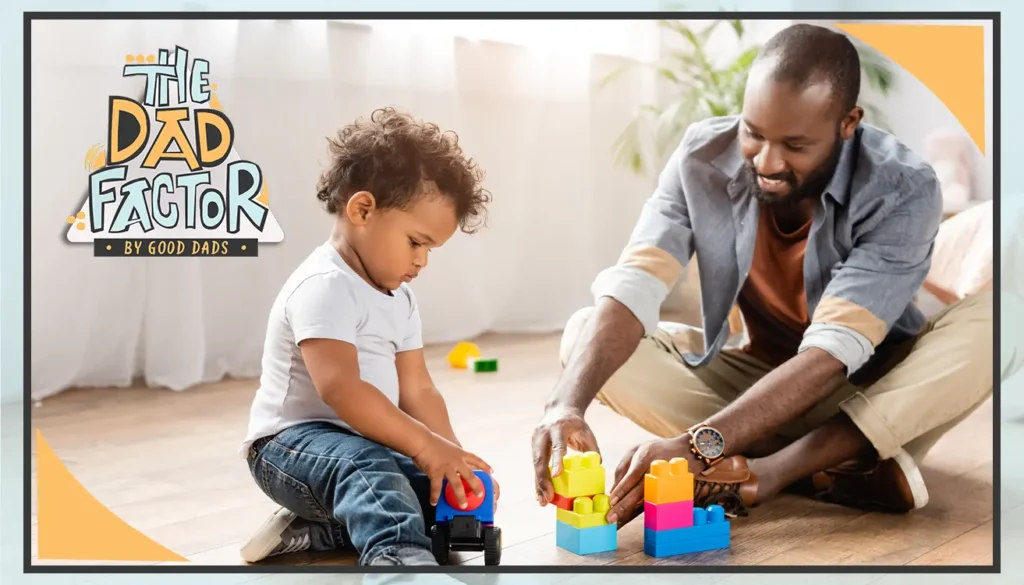
At Good Dads, we talk a lot about the importance of being an intentional father, but what does that actually mean? As it turns out, it means a lot of things! Being “intentional” means taking an active role as a parent. It means deciding, not sliding.
And from what we’ve learned on the podcast, being an Intentional Dad can look different in any household. Maybe it’s showing up to every basketball game or dance recital. Maybe it’s wrestling in the living room or making Play-Doh masterpieces on the kitchen table. In other words, it doesn’t matter as much how you parent with intention, more that you do parent with intention—no matter what your household looks like.
Remember to share your Intentional Dad wins with us! You can email us, fill out a Contact Us form, or tag us on social media.
For Newborns and Infants
Use skin-to-skin contact. Skin-to-skin is a low-effort way to bond with Baby, and help them form secure attachments. Generations ago it was common wisdom that infants attach to only one caregiver, but more recent research shows that this isn’t the case! Dads as well as moms can establish strong attachments with the baby. Even fathers who may need to spend extended time away from their baby can still have a good bond, which is certainly encouraging for fathers who may not always get to be with their baby.
Go for stroller walks. A walk around the block does wonders for everyone. For Dad, it’s an opportunity to do something special together, just the two of you. For Baby, it’s a chance to get some fresh air and take in the whole wide world (or just the cul-de-sac). And for Mom, it’s a moment of reprieve, to catch her breath. Certainly Mom would appreciate 15 minutes to nap, take a shower, or eat ice cream straight from the tub (no judgement here).
Have playtime with Baby. Dads tend to be more active in play with their child compared to moms. Having playtime with Dad, even when Baby is very young, allows children to explore moving their muscles and feeling emotions in a safe, controlled environment.
For Toddlers and Preschoolers
Offer simple choices. We spoke at length in a previous blog about the power of making choices. Decision-making takes practice, and young people will rely on these skills later on for larger, more consequential decisions. In the toddler and preschool years, find opportunities to give your kids choices. These decisions certainly don’t have to be grandiose or complicated. “Would you rather wear your red shoes or your blue shoes to the park?” “Do you want to eat your strawberries with a fork or a spoon?” These opportunities to decide preserve the parent’s ultimate control over the situation, (e.g., we’re not negotiating on eating the strawberries), but also give the kiddo a chance to make choices that suit them.
Get down to your child’s level. The world looks very different from about six feet off the ground. That’s where grown-ups hang out, but children live life from a very different angle. When life gets busy and the to-do list grows, wrote Good Dads board member Robert Hawkins in a previous Good Dads blog, it’s easy to forget about play. “But if you ask a child, ‘Would you rather have new toys, or a dad who is down on the floor playing?’ they go for the dad gig every time.”
Introduce age-appropriate chores… Chores are a great way for dads to aid preschoolers in building a sense of responsibility and self-reliance, developing executive functions, and nurturing teamwork and empathy. We love this story on the Good Dads Podcast about perseverance leading to success when one dad watched his son take out the trash for the first time.
…but temper your expectations. Doing chores together takes patience! And as long as we’re being realistic, that chore is also going to take a lot longer than if you just did it yourself. “When (my kids) would see me rinsing dishes to place in the dishwasher they wanted to ‘help’ which meant we needed to pull a chair to stand at the sink and operate the sprayer,” wrote a dad of two . “Needless to say, I ended up with a kitchen floor drenched in water and dirty dishes still needing rinsing. I noticed that as my children watched how we cleaned the dishes, they progressed in their ability to keep water in the sink and on the dishes.”
Unstructured play. Modeled, intentional and interactive play might just be one of the most impactful things dads can do for a toddler’s social and emotional development. When your child has your undivided attention, great things can happen. Make time for playtime together without expectations, timers or winners. Maybe you’re pretending that you’re a pride of lions on the hunt on the safari, or maybe you’re cooking a pretend meal in a fictional bistro. Let your youngster take the lead…and worry about cleaning up the mess later!
Verbal affirmations. Children in this age range are still learning about their feelings and their place in the world. They don’t often have a grip on their emotions, or what’s real and what’s fiction. Because they can’t get what they need from inside yet, children often look for confirmation that everything is OK externally, like from a guardian. That’s why verbal affirmations are a great tool to keep in your toolbelt. Try kind words like, “I believe in myself,” “I’m going to have a great day,” and “I like being me,” to boost your kiddo’s confidence.
For Elementary Schoolers
Call attention to positive/kind behavior. It’s helpful for children when parents label behaviors, one early childhood expert told Good Dads. “When you see your child do something kind, call it out, and do so often.” This positive reinforcement helps children make sense of the world and gives us parents a chance to pause and recognize all that our children are doing right. This might look like:
““I saw you share your markers during drawing time. That was very kind! It is so nice when you share.”
“You picked up your toys after dinner. That was so kind and helpful!”
Make eye contact (can be for any age group). Along with physical touch, those closest to us need our direct eye contact, says Good Dads’ own Dr. Jennifer L. Baker. “Especially today when people are so often distracted by their phones or some other screen, kids and adults need to see the people they love most looking at them, face-to-face, eyeball-to eyeball.” A perfect example is when Chandler, the son of Good Dads board member Will Cox, called his dad out for being on his phone because he could tell he didn’t have his dad’s undivided attention. “Listen with your eyes!” he begged.
Model social behaviors that you want to see. Every parent has had a moment where you did something in front of your child you regret—only to later have them happily mirror that same regrettable behavior later. Fortunately, your children can model positive social interactions as well! When kiddos see Dad take turns, be respectful and helpful towards others, they are more likely to do these things as well.
For Preteens and Middle Schoolers
Take seriously your preteen’s bids for attention. Say your twelve-year-old daughter asks you: “Dad, does this outfit look cute on me?” While on the surface, this question sounds like one seeking fashion advice. But it goes a lot deeper. In fact, this is a central, foundational question about self-confidence, and your response to this question is critical. This question demands your undivided attention! Phones down! Listen with your eyes, like Chandler said.
Stay in contact with your tweenager’s school. School is ripe with opportunities to be an intentional dad. Do you know the name of your child’s principal? Did you attend your child’s Open House? Do you read the notes and flyers sent home in your student’s backpack? One dad and retired educator wrote on the blog that dads play an important role in their students’ success. Schedule a time to meet with your child’s teachers, he advised. “Let them know that you aren’t coming to them with a problem or complaint, but that you want to learn more about them and their vision for the school. At the meeting, share that you appreciate the efforts of all the staff and want to be involved and helpful in your child’s learning. Taking this step opens a powerful avenue of communication between you and the school. If concerns or issues develop during the year, all parties are already acquainted with each other.”
Encourage routine and school success through clubs and teams. Being involved in an organized activity with other children your child’s age helps develop social skills and personal accountability. But remember: This is your child’s activity, not yours. Encourage, enjoy and attend those activities, but don’t be overbearing. It’s the activity itself that matters most!
Resist the urge to “rescue” your children from low-risk consequences. You’ve probably heard of “helicopter parenting,” which describes the over-attentive guardian whose bad habit of intervening risks preventing children from making decisions and learning from mistakes on their own. One of the best-ever anti-helicopter arguments comes from Good Dads’ founder and director Dr. Jennifer L. Baker, who tells a humorous story of when her daughter forgot to put her favorite jeans in the dryer… and the natural consequences that arose from that.
For Teenagers
Take an interest in their interests. In the fast-paced twenty-first century, it’s not always easy to keep up with the latest in pop culture. It’s possible (likely, even) that your teen is super into something you’ve never heard of. Jujutsu Kaisen? Labubu? Life of a Showgirl? Chappel? Owala? Genshin? You might be tempted to scoff at your teen’s music, TV, word choice or video games, but don’t be so quick to discount it as boring or silly. Watch the show or play the game with them, and you’ll end up making lifelong memories.
We asked 50 teens what they want from their dads. They said: Listen to us, spend time with us, and support us. A Springfield, MO, teacher and father asked his algebra classes what makes a good dad. Of the many responses, several themes emerged. Be there for your kids. Listen to them. Don’t make promises you can’t keep. Discipline your kids. It’s interesting that these students echoed many of the commonly accepted expectations of fathers—which makes it all the more important to live up to those expectations!
Set the tone for the household. When you’re stressed or nervous, your children pick up on it. “How we are mentally sets the tone for the whole house,” said Dr. Shelby Smith, a dad and physician, on the Good Dads podcast. He described it like a mirror being held up in front of him. It’s remarkable to think about how the stressors Mom and Dad face can have a big impact on the mental and emotional state for the rest of the home! While we can’t always control life’s stressors, we can be aware and intentional about how we “set the tone” for the house by practicing good coping skills.
Know when to apologize — and use it as a teaching moment. One of the best ways to be an intentional dad, says podcast co-host Jason Hynson, is to know when to apologize! Jason shared this great story on one episode of the podcast, where he took the chance to leave the metaphorical door open for his 19-year-old son by being quick to apologize when he was wrong. It takes a lot to swallow your pride with a teen! Even though Jason didn’t quite get what he wanted in return for that apology in the moment, the act of owning up to his misstep will pay for itself in the long run.
For Adult Children
Respect their boundaries and independence. As your sons and daughters enter adulthood, they’ll likely establish boundaries to define their independence, says guest writer Jack Shaw. Respecting those boundaries is essential for maintaining a positive relationship. But there’s two sides to that coin! “It’s equally important to express personal boundaries if the relationship ever feels one-sided or overwhelming. You build trust by respecting each other’s boundaries and ensuring you both feel valued.”
Be an amateur career counselor. It’s likely that the two biggest decisions facing a young adult are what to do about college and for a career. As a dad, your life experience can be invaluable in helping your child make an informed decision on those issues, says Good Dads’ own Jim Millsap in a blog. Help them discover their aptitudes and learn the types of vocations they’re best suited for, given their skills. If your parenting was characterized by trust and honesty, your child will know the motives behind your advice are genuine and come from a place of love. They’ll also be confident that, should they choose a different course of action, your love and support is still there for them. (For insights and real-life advice from 5 career sectors, check out our free “What I want to be when I grow up” series of video interviews.)
Practice active listening. Being a good listener takes some real intentionality! We love the way this father of three put it in a previous Good Dad blog: “‘I hear you’ often begins with ‘I here you.’ Okay, I recognize that this doesn’t make sense grammatically speaking, but let me explain. In order to listen well, I need to be present with (my daughters). Being in the same room is not the same as being with them. To hear them, I must also be here, in the moment, not on my phone or staring off in the distance or watching the instant replay of the game or working on my computer.
Be curious about behavior. This nugget of wisdom comes from the premier Intentional Dad, Jason, who hosts the Good Dads podcast of the same name. Jason’s young adult son wanted to rebuild an engine, but Jason observed that his son’s priority wasn’t really the engine—it was something else entirely. By being intentional and tuned into what his children prioritize, Jason gained valuable insight about their tendencies. And in the grand scheme of things, knowing about your children’s tendencies means you’ll be better equipped to offer advice and guidance for your young adult during this important transition period.
Be an expert on your young adult’s strengths and areas for growth. At the risk of stating the obvious: Not every young adult is the same! Some are ready to leave the nest the day they turn 18. Others need a little more guidance and patience. Good Dads podcast host Jason says fostering an independent spirit in your children involves being honest about “reality” — what is real and realistic about the situation. Your young adult, even if they are of-age, may not be fully ready to “leave the nest” yet. Maybe your punctual but financially flippant 20-year-old is always at work on time but blows their whole paycheck on sneakers and a new gaming PC. That’s a perfect opportunity to be an intentional dad: Be a cheerleader for your young adult’s strengths while being a coach for the areas they still need help.